Food Worth
Talking About
Real recipes from a real kitchen. No restaurant tricks, no 47-ingredient shortcuts — just the way Pakistani home cooks have been doing it for generations, with a few honest notes on what actually goes wrong and why.
Three Things Worth Making This Week
No lists of 30 recipes. Just three, written properly, with reasons to trust each one.
 Featured
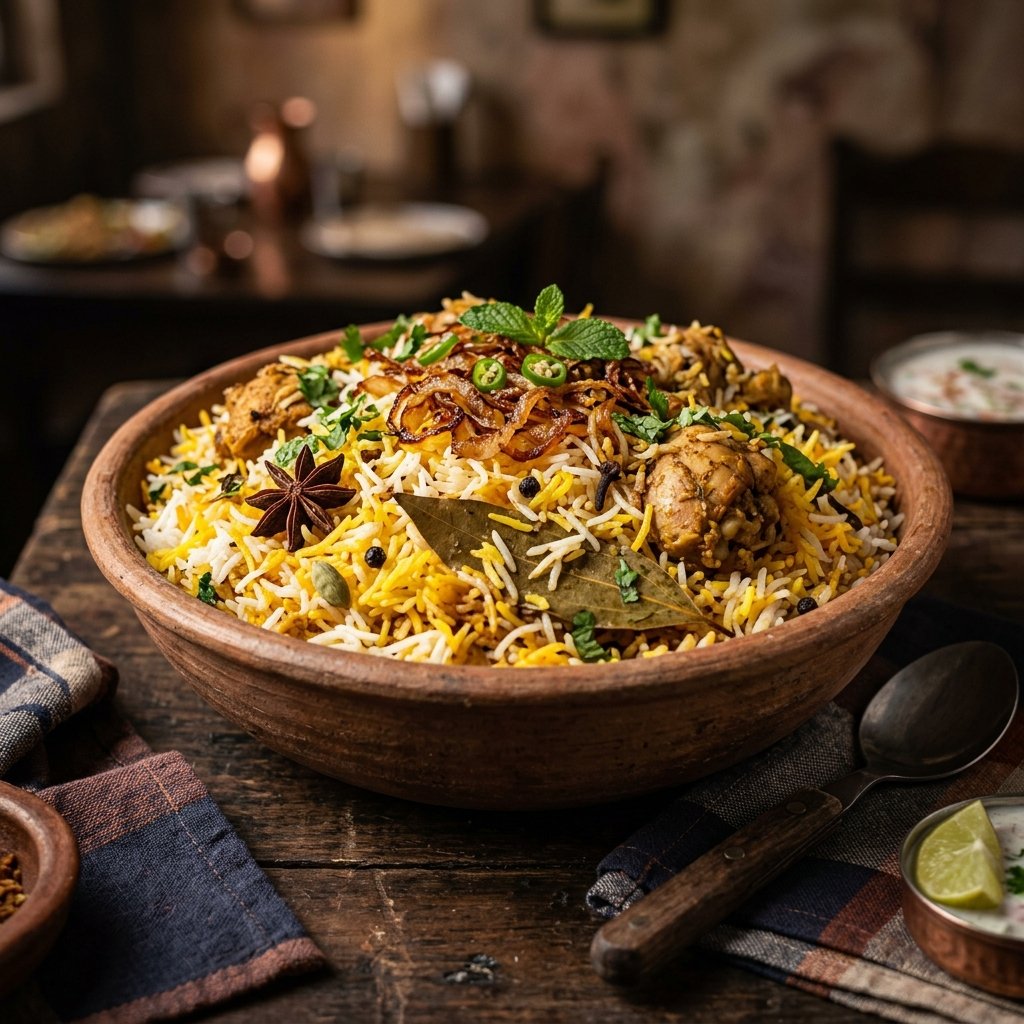
The Chicken Biryani That Actually Tastes Right
Every family has a biryani recipe. Most of them are "my grandmother's," none of them are wrong, and all of them get debated at dinner tables with a seriousness that the peace process deserves. This one is mine — not my grandmother's, actually, but built from three kitchens worth of watching and tasting.
The part that nobody puts in recipes: the dum. You cannot rush dum. It is not "cover and simmer." Proper dum means low heat, sealed with foil pressed under the lid, and at least twenty-five minutes of total stillness while the steam does what steam does — circulates, swells the rice, and pulls every fragrance from the spice into the grain. Open it early and you've got layered rice and curry. Wait and you've got biryani.
What you need
1 kg chicken, bone-in. 800g basmati, soaked 30 minutes. 250g yogurt, whisked. A cup of caramelized onions — these take 40 minutes on medium heat, not 10 minutes on high. Ghee. Whole spices: 4 green cardamoms, 2 black cardamoms, 1 cinnamon stick, 6 cloves, 2 bay leaves, 1 star anise. Ginger-garlic paste, 2 generous tablespoons. Lemon, mint, and a small pinch of saffron bloomed in two tablespoons of warm milk.
The marinade matters more than anything
Chicken sits in yogurt, ginger-garlic paste, salt, red chili, coriander powder, and half the caramelized onions for at least four hours. Overnight is better. The yogurt tenderizes; the onions add sweetness that changes character after cooking. Don't skip this step and don't cut it short. This is why restaurant biryani tastes different — they rarely marinate this long.
Layering
Cook the chicken on medium heat in ghee until 70% done — it finishes in the dum. Par-boil the rice to exactly 70% too, heavily salted water with a bay leaf in it. Layer: chicken masala on the bottom, rice on top, then dots of saffron milk, remaining caramelized onions, mint leaves, and a drizzle of ghee. Seal it. Twenty-five minutes. Don't peek.
Doodh Patti: The Tea You Make When Nothing Else Will Do
Doodh patti is not chai latte with a Pakistani flag on it. It's stronger, darker, brewed entirely in milk with no water, and it has a slightly thick body that you only get from simmering too long in a way that would horrify a tea purist. It is, arguably, the most consumed hot drink in urban Pakistan, made four to six times daily in most households, and there are still debates about the correct amount of tea leaves.
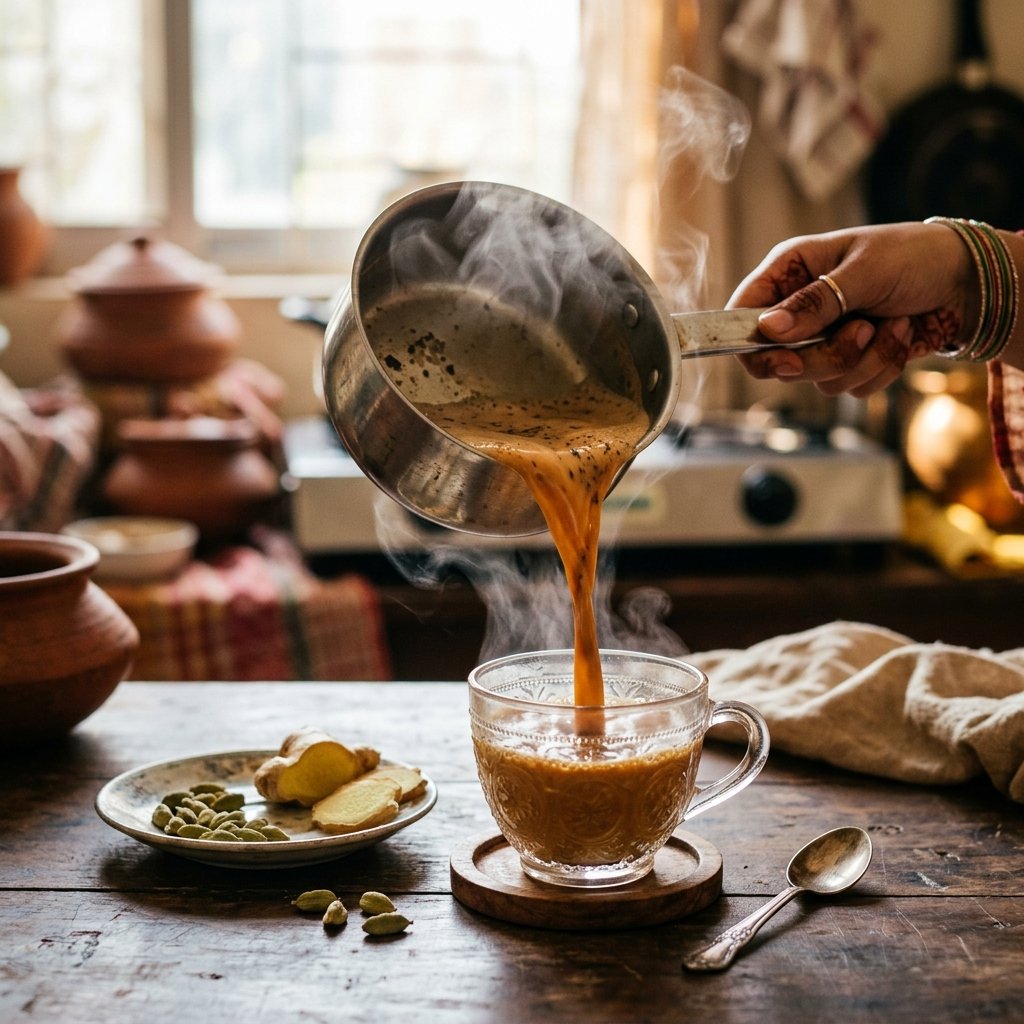
The method is this: bring full-fat milk to a gentle boil. Drop in your tea leaves — I use 1.5 teaspoons of loose leaf for one large cup. Add one green cardamom pod, cracked. Let it simmer on low for four to five minutes, stirring occasionally, watching the milk darken from cream to caramel to that particular amber that means it's ready. Sugar goes in last, off the heat. Strain into a glass.
The glass matters. Doodh patti tastes different in a cup. It needs something it can breathe in, something you can see through and watch the color of. Pakistan's chai culture runs on small glasses and thick clay kulhads — both for the same reason: you want to hold it, feel the warmth, and drink it hot before it cools down.
What goes wrong
Boiling too hard. If your milk is at a rolling boil, the proteins scorch and the tea turns bitter in a way that no amount of sugar fixes. It should barely simmer — surface movement, not bubbles. The other mistake is adding cardamom too early. It turns sharp and medicinal. Put it in with the tea leaves, not before.
Tarka Daal: Why the Last Thirty Seconds Matter Most
Daal is the meal that home cooks make confidently and restaurant chefs overlook. It is also the dish where the difference between average and very good comes down to thirty seconds of attentiveness at the end.
Start with masoor daal — red lentils, split. They cook faster than any other and they don't need soaking. 200g feeds four people with rice. Rinse them until the water runs clear. Add to a pot with 600ml water, a halved tomato, half an onion, a teaspoon of salt, and a pinch of turmeric. Bring to a boil, skim the foam, reduce to a simmer, and leave it for twenty minutes until the lentils dissolve completely. No pressure cooker needed for masoor — it gets there on its own.
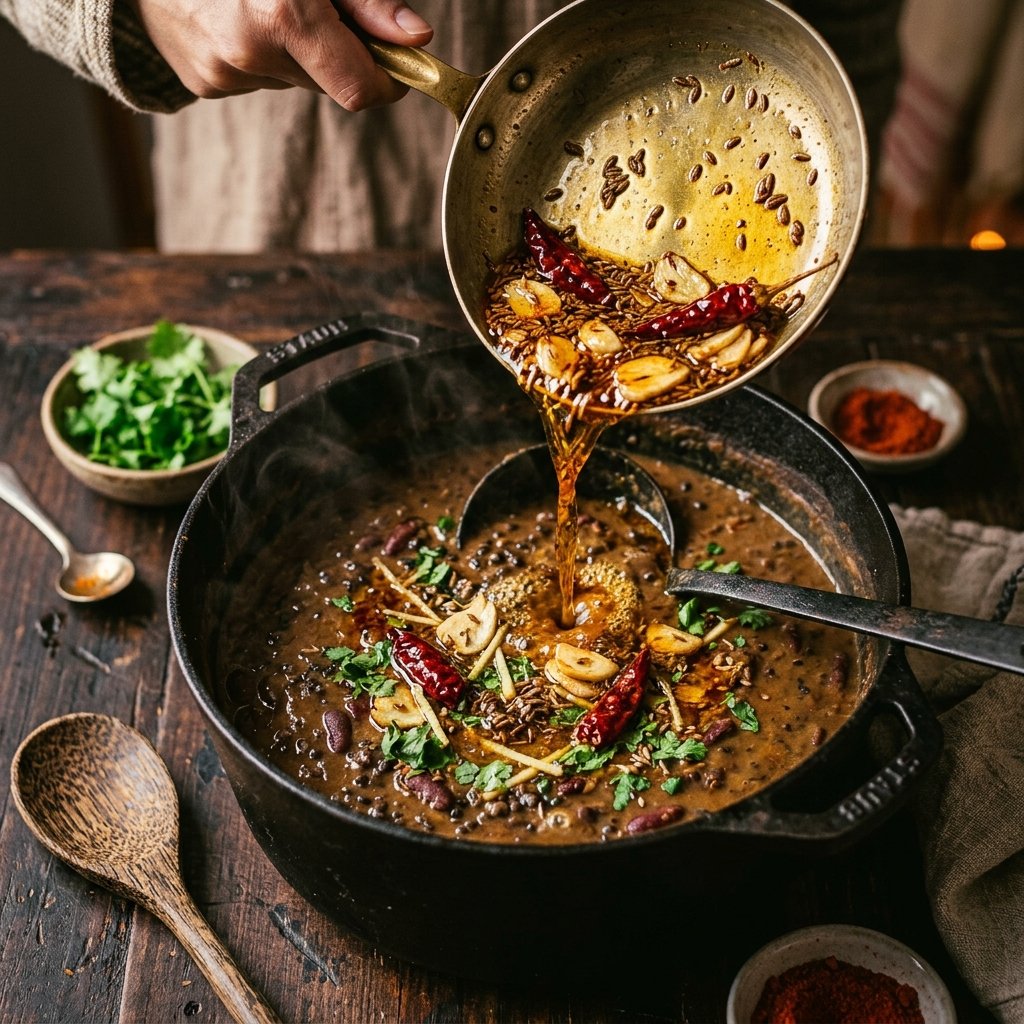
Now the tarka. This is where people rush. Heat two tablespoons of ghee in a small pan until it shimmers. Add cumin seeds — they should sizzle within two seconds. Then two dried red chilies and three cloves of thinly sliced garlic. Watch them. When the garlic turns golden at the edges — not brown, golden — take the pan off the heat and add a pinch of red chili powder directly into the hot ghee. It blooms for three seconds. Then pour the whole thing over the daal immediately.
The thirty-second rule
If you let the garlic go past golden, the tarka tastes bitter. If you add the chili powder while still on the flame, it scorches before it blooms. The window is narrow and the heat carryover from the pan does the work — you just have to trust it and move fast.
Four Things That Actually Improve Your Cooking
Not tools. Not gadgets. Habits and understandings that change how you taste and smell and adjust while you cook.
Salt in Layers, Not at the End
Adding all your salt at the end of cooking seasons the surface but not the food itself. Salt as you build — with your onions, with the tomatoes, when the chicken goes in. Each layer of salt penetrates differently and the final result is food that tastes seasoned, not salty. There is a difference and it is noticeable.
Understand When Your Pan Is Actually Hot
A pan that isn't hot enough before the oil goes in is the reason onions stew instead of fry, and meat releases water instead of searing. Test it: a drop of water should evaporate within two seconds. For a tarka, the ghee should shimmer and move visibly before any spice goes near it. If the cumin doesn't sizzle immediately, the pan is not ready.
Bhunai: The Art of Cooking Down
Bhunai is the Pakistani technique of continuously stirring and folding a masala on high heat until the oil separates from the spice paste and the whole thing looks almost dry. This is not burning — it is developing flavor through Maillard reactions in the spices themselves. A masala that hasn't been bhuno'd properly will always taste raw underneath, no matter how long you simmer it afterward.
Taste Constantly and Early
Most cooking mistakes happen because the cook didn't taste until the dish was almost done. Tasting early — when the masala is forming, when the meat first cooks through — tells you what it needs while you still have time to add it. Salt is easier to add than remove. Spice heat cannot be undone. Taste at every stage and you will rarely produce something that needs rescuing at the end.
The best Pakistani cooks I've known didn't measure much. They adjusted constantly — smell, color, texture, taste. The recipe is a starting point. Your senses are the actual method.
Where the Recipe Came From
Chaska started because I couldn't find a recipe blog that wrote about Pakistani home cooking the way it actually happens — not the formal restaurant version, not the food-documentary version with deep ancestral significance attached to every dish, but the everyday version. The thing your mother makes on a Tuesday. The daal that happens because there's nothing in the fridge. The chai that gets made six times in a single afternoon without anyone deciding to make it.
The word chaska means a particular kind of craving — not hunger exactly, but the pull toward a specific taste that you know intimately and can't substitute with something else. You get a chaska for your mother's keema. Not keema. Her keema. That specificity is what this blog tries to get at.
I grew up in Lahore and have been cooking since I was old enough to be useful in the kitchen, which in a Pakistani household means somewhere around age nine. I am not a trained chef. I have no culinary school background. What I have is twenty years of watching skilled home cooks adjust things mid-dish, and enough failures of my own to know what goes wrong and why.
Recipes here come with the honest version of events — what I tried first that didn't work, what the actual difficulty is, which steps you cannot skip and which ones are forgiving. The goal is that you come away being able to cook something properly, not just follow a sequence of instructions and hope it resembles the picture.